
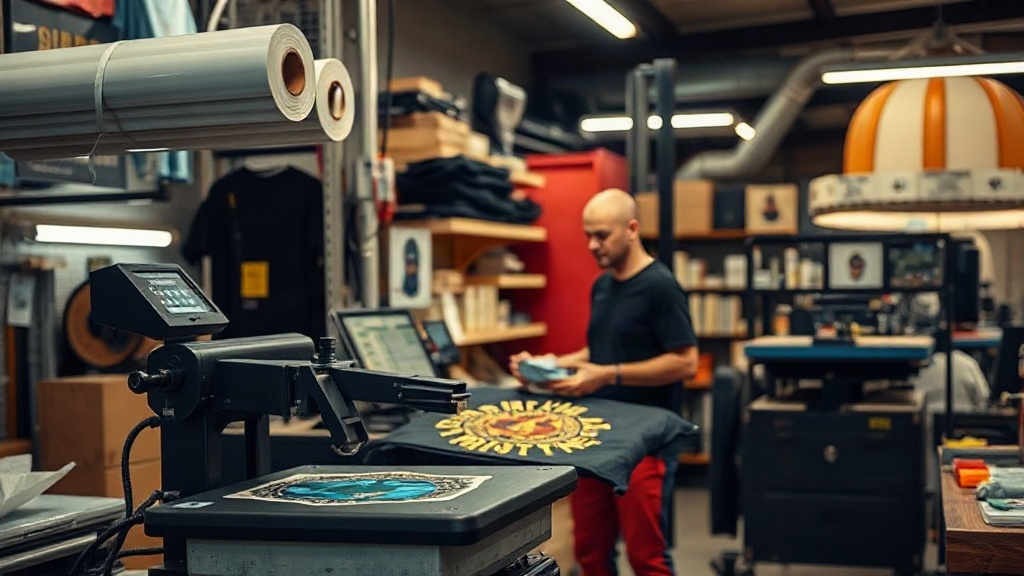
When you run a small print shop, every decision about equipment and supplies affects your bottom line. If you're tired of turning down small orders because screen printing setup eats your profit, DTF transfers might be the answer. But is it right for your business? Let's compare these two popular methods across the factors that matter most to small operations.
How DTF Transfers Work
DTF transfers (Direct to Film) involve printing your design onto a special film using pigment-based inks, dusting it with adhesive powder, and curing it. Then you press it onto a garment with a heat press. The process doesn't require weeding, masking, or multiple screens. You can print full-color designs with gradients and fine details in one go. Once printed, the transfers can be stored and applied on demand, which is perfect for small batches or custom orders.
How Screen Printing Works
Screen printing pushes ink through a mesh screen onto the fabric. Each color needs its own screen, and you must align them precisely. Setup includes burning screens, mixing inks, and test prints. It's labor-intensive upfront, but once running, screen printing churns out identical prints at high speed. It's the go-to for large orders with few colors.
Cost Comparison: Setup vs. Per-Unit
For small shops, the cost structure makes or breaks a job. Screen printing has high setup costs per color, often $20-$50 per screen. So a 12-piece order with 3 colors could cost $60-$150 just in setup. DTF transfers have no screen setup. You print the design once, and each transfer costs a fraction of that. For orders under 50 pieces, DTF is usually cheaper. However, for large runs (500+), screen printing's low per-unit cost wins.
Fabric Compatibility and Feel
Screen printing works best on 100% cotton. On polyester, the ink may not bond well, leading to cracking. DTF transfers adhere to cotton, polyester, blends, and even nylon. The stretch and feel depend on the transfer quality. A well-made DTF transfer has a soft hand and stretches with the fabric. Cheap transfers can feel rubbery. Screen printing offers a classic, durable print that many customers expect.
Time and Labor
Screen printing requires manual labor for each color and each step. For a small shop with one or two employees, a 100-piece order could take a full day. DTF transfers streamline the process: print, powder, cure, press. You can prepare transfers ahead of time and press them as orders come in. That flexibility is huge for handling rush jobs or personalized items.
Quality and Durability
Both methods produce durable prints when done correctly. Screen printing is known for its longevity, often outlasting the garment. DTF transfers have improved significantly; quality transfers survive dozens of washes without fading or cracking if applied properly. The key is using a reliable heat press and following temperature and pressure guidelines.
Which Method Fits Your Shop?
Consider your typical order size, design complexity, and fabric types. If you often handle small batches, full-color designs, or diverse fabrics, DTF transfers give you an edge. If you mostly do large runs of simple designs on cotton, screen printing remains efficient. Many shops use both: DTF for custom and small orders, screen printing for bulk.
Frequently Asked Questions
Can I use DTF transfers on dark garments?
Yes, DTF transfers work on dark fabrics. The printer lays a white ink base behind the colors, so the design pops. You don't need a separate white screen like in screen printing.
How long do DTF transfers last?
With proper application and care, DTF transfers can last 50+ washes. Wash inside out in cold water and avoid ironing directly on the print.
Do I need a special printer for DTF?
You need a DTF printer that uses pigment inks and a shaker machine for the powder. Alternatively, you can buy pre-printed transfers from a supplier and just use a heat press.
Is DTF cheaper than screen printing for 50 shirts?
For 50 shirts with a multi-color design, DTF is often cheaper because there's no screen setup. Screen printing becomes more cost-effective at higher quantities.
Can I stretch DTF prints?
Yes, quality DTF transfers stretch with the fabric without cracking. The adhesive powder creates a flexible bond. Avoid overstretching to prevent damage.